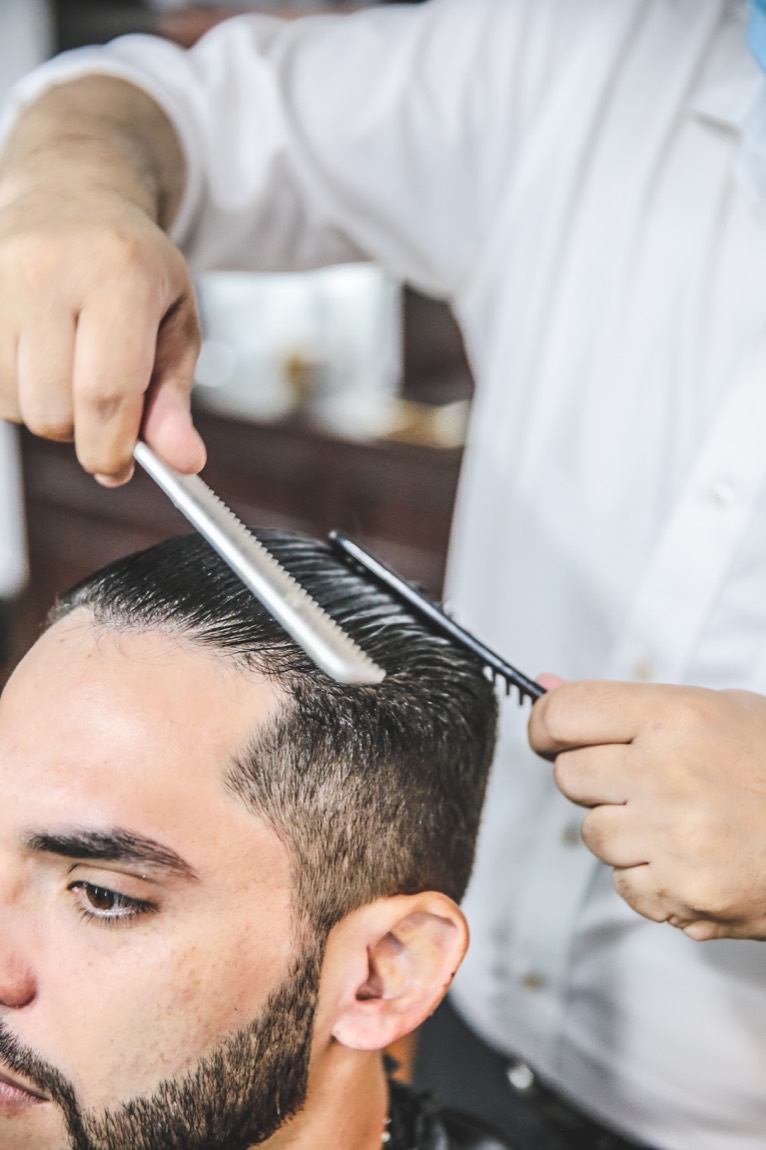
The fade is the most requested cut in the shop, and also the one most often done poorly. Cut with care, it is a gradual change in length that travels from the skin at the neckline up into the hair on top, so smoothly that you cannot point to where one length ends and the next begins. Cut without it, the fade arrives in steps and hard lines, and it grows out within the week. The difference is rarely the clipper. It is the hand holding it.
In Singapore the fade has quietly become the everyday cut for men who want to look considered without spending their mornings on it. It sits well under a collar, it reads clean in a photograph, and it asks very little of you once you leave the chair. Done properly, it is as much a sensible cut as a handsome one.
What a fade actually is
The idea is simple. The hair is left longest on top and taken shortest at the edges, with a soft blend in between. A skin fade carries the shortest point all the way down to the skin itself, for the cleanest finish at the neckline and around the ears. A taper is gentler, keeping a little length at those edges so the change is softer and slower. Everything else sits between those two, and the right answer depends on your hair, your work, and how sharp you care to look on an ordinary Tuesday.
Low, mid or high
The name simply tells you where the blend begins. A low fade starts just above the ear and keeps most of the weight, which reads quiet under a suit and suits a boardroom. A mid fade lifts that line to the temple for a little more contrast. A high fade climbs higher again and makes a bolder shape, favoured by younger clients and by anyone who wears real length on top. None of them is more correct than the others. They are the same idea in different measure, and the choice is yours to make with your barber.
Why it holds in our weather
Our climate is unkind to a heavy cut. Short sides sit cooler through the afternoon and stay tidy when the humidity would leave longer hair limp by lunch. A fade also grows out more evenly than a cut built on hard lines, so the shape stays honest for longer between visits. For a man who would rather not think about his hair once he has left us, there are few cuts that repay the chair as well.
How we cut it here
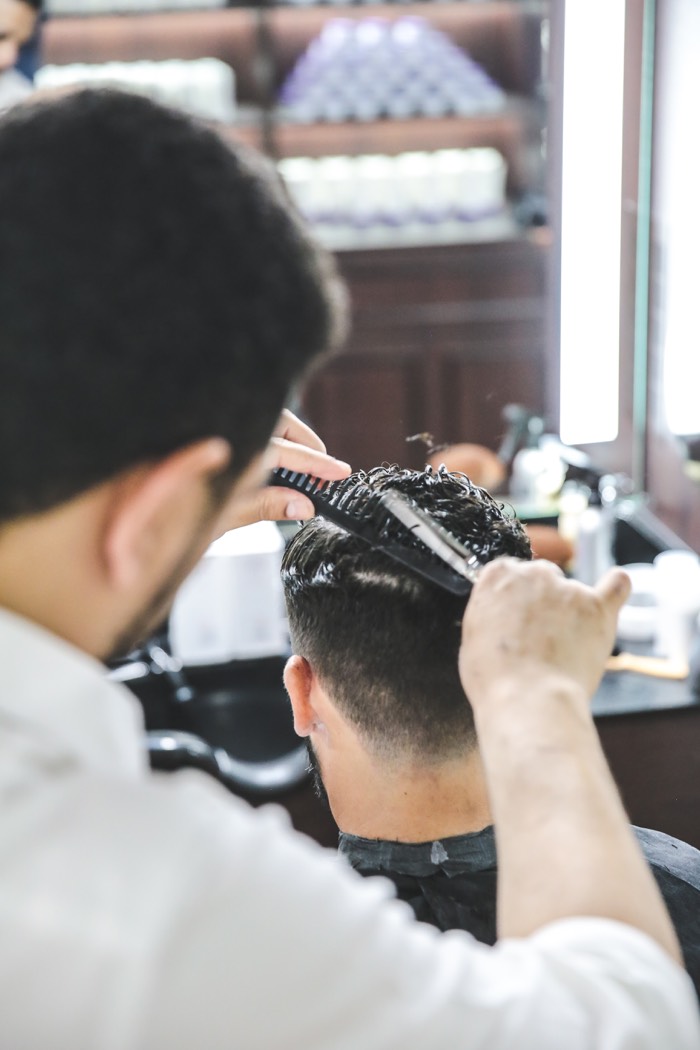
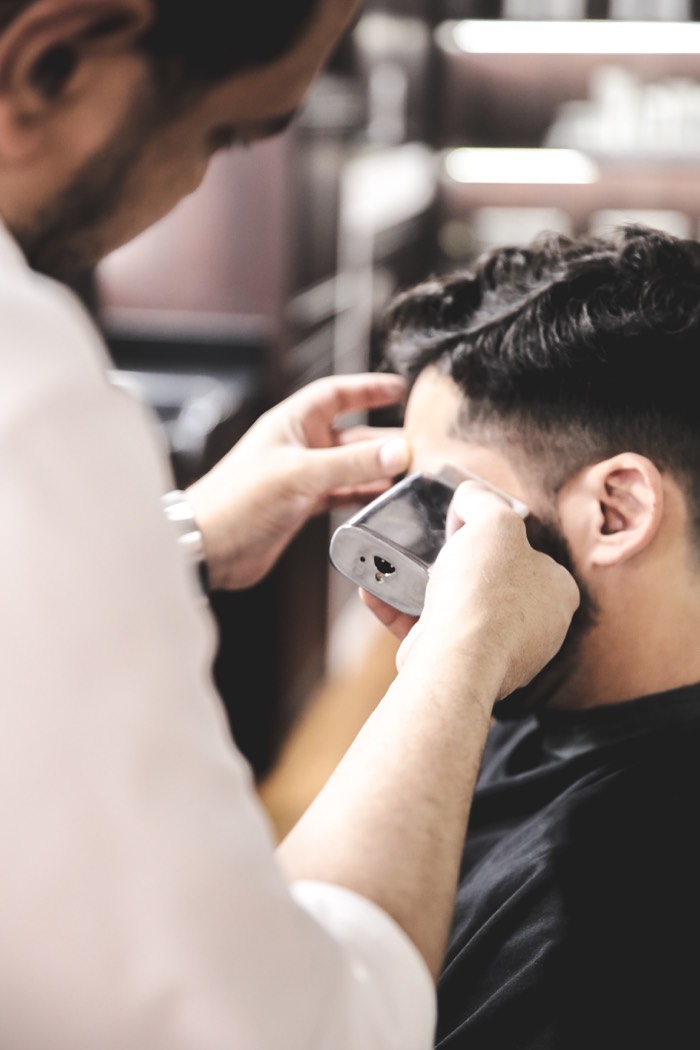
There is no way to hurry a clean fade. It is built in passes, each one lifting the blend a fraction and softening the join, checked against the light and against the shape of your head rather than a guard number written on a card. Shahrul does most of the fade work in the shop, and he cuts to the head in front of him, never to a photograph. The few minutes of conversation before the first pass matter as much as the clipper that follows. We would rather understand how your hair grows than correct a line that went in too high.
Keeping it sharp
A fade looks its finest in the first fortnight, then the skin at the edges begins to fill in. Most clients return every two to three weeks to keep the neckline and the sides clean, and let the top run a little longer between fuller cuts. A light matte product and a cool finish with the dryer will hold the shape through a humid day. Beyond that, a fade asks little of you, which is rather the point of it.
A fade is not a trend we have taken up. It is ordinary barbering done with attention, the same attention we give a shave or a beard. If you have worn one before and been left with lines you had to hide, sit with us once and feel the difference in how it grows out.
Book a chair, or send us a message on WhatsApp. We will cut a fade that suits your head, your hair, and the life you lead outside the shop.