

The boardroom look is rarely a single style. It is a small set of cuts that work in any room — from a Tokyo deal table to a Geneva board meeting to a Singapore C-suite.
This is the fourth piece in The Executive Series. The five cuts below have one thing in common: they read as competence before the wearer has said a word.
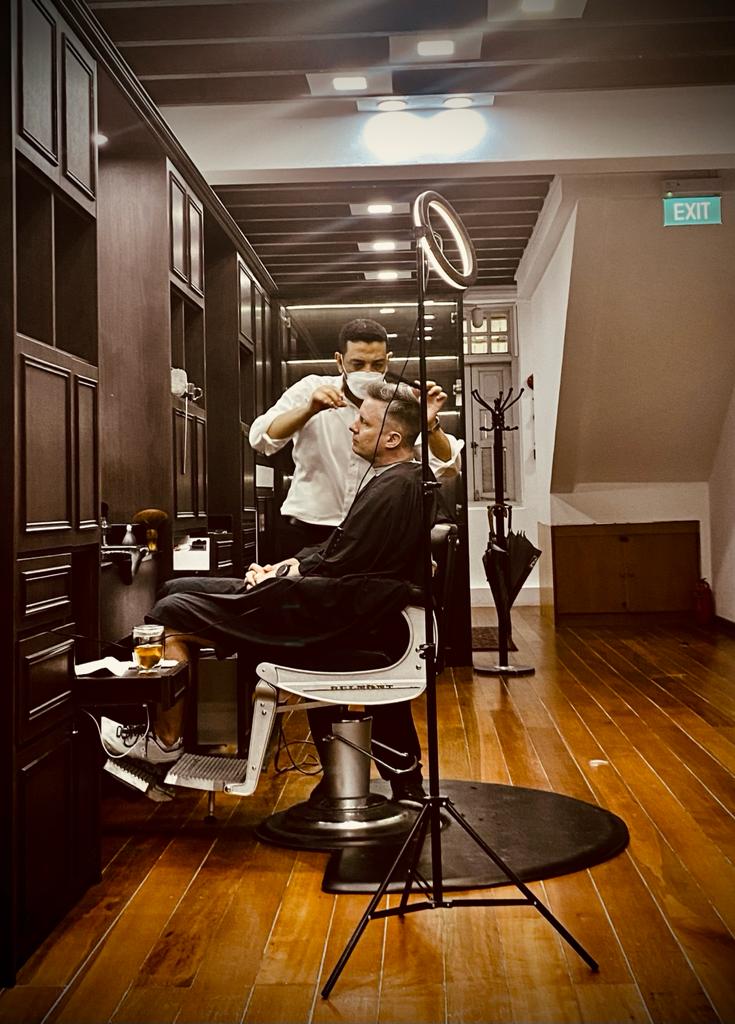
1. The Side Part — Classic British
The most enduring executive cut in the English-speaking world. Short and tight on the sides, slightly longer on top, parted to one side and held with a light pomade.
This is the cut that suits men in their forties and beyond best. It survives portraits well. It reads the same in 1985 photographs and 2026 LinkedIn profiles.
2. The Modern Taper — Conservative but Current
For the executive who wants to look current without crossing into fashion. The sides are tapered down to the skin gradually — not faded sharp — and the top is kept conservative.
This is the cut we recommend most often for executives in their thirties.
3. The Crew Cut — When Simplicity Is the Statement
Short throughout, slightly longer on top, finished without product. The advantage is travel friendliness — the look stays consistent across climates and time zones.
The crew cut is favoured by gentlemen with strong facial features and by men whose work life does not allow for daily styling.
4. The Scissor Cut — For the Senior Executive
Cut entirely with scissors and comb, with natural movement preserved through the top and sides. No machine work at all.
This is the cut that ages most gracefully. It reads as established, considered, and quietly senior. Most of our long-term clients move toward the scissor cut as their careers mature.
5. The Skin Fade With a Soft Top
The most modern of the five. Tight skin fade on the sides, length kept on top with movement worked in by point cutting. The contrast is deliberate but not theatrical.
This cut suits younger executives, tech leadership, and creative-industry founders. We do not recommend it for traditional financial or legal environments above associate level.
What All Five Have in Common
Three things separate a boardroom cut from a regular haircut:
- Precision at the neckline. The line where the haircut ends should be invisible from across the room, not crisp from a metre away.
- The right product for the climate. A pomade designed for London winter looks heavy under Singapore meeting-room lighting.
- The two-week test. A good executive cut still looks intentional two weeks later. Most cuts do not.
How to Decide Which Cut Is Yours
The honest answer is that a heritage barber will tell you. Mr Hassan El Gamal — who founded The British Barbers in 2004 and has cut hair for ministers, ambassadors, and chief executives across three countries — will look at your face shape, your hair growth pattern, and the kind of room you walk into for work, and recommend one of the five.
The conversation takes ten minutes. The cut takes another forty.
Visit Us — One Hundred Metres from Maxwell MRT
The British Barbers sits at 37A Kreta Ayer Road, Singapore. For gentlemen who prefer the Master’s chair specifically, ask about a Private Suite arrangement.
